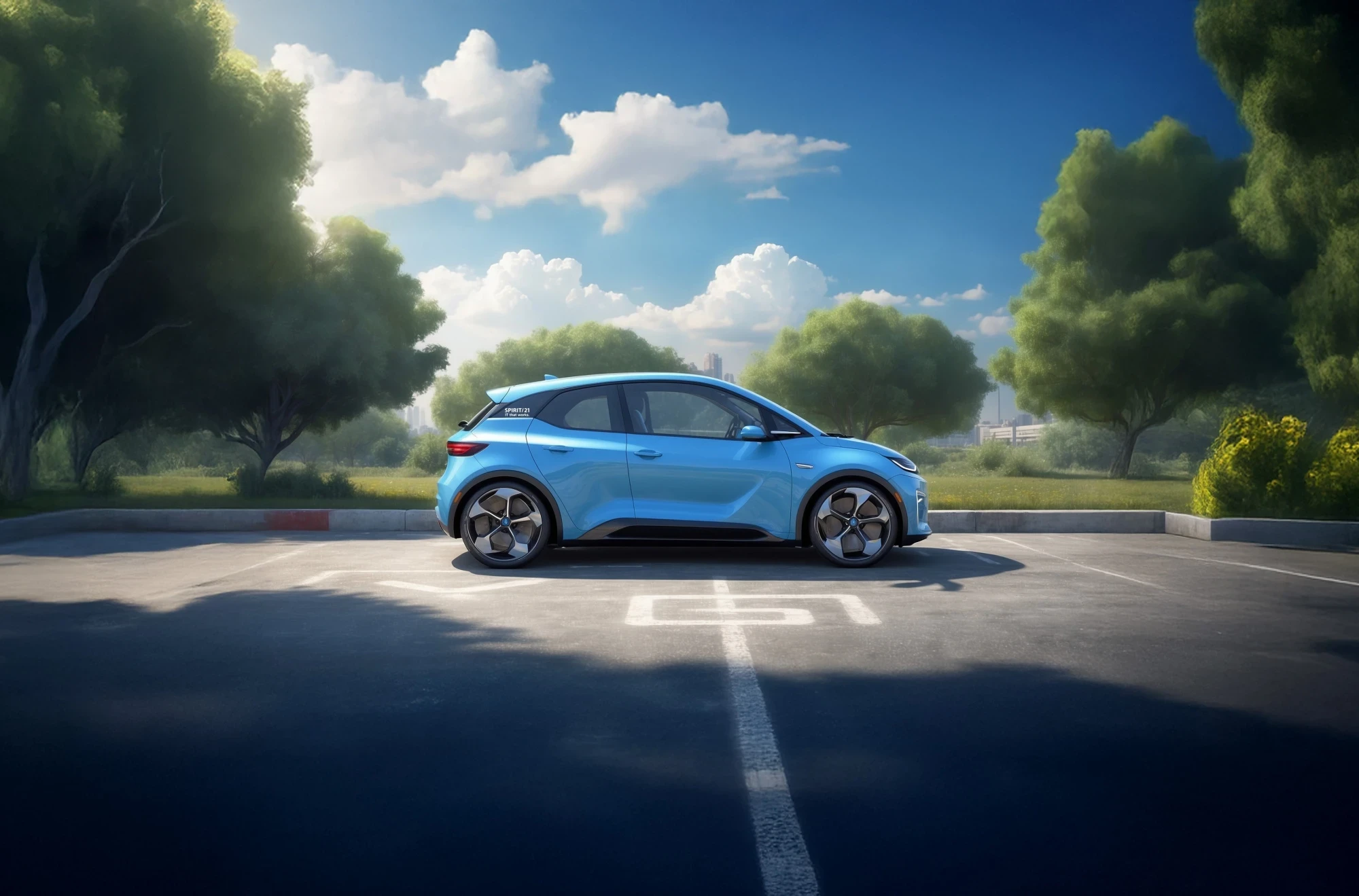
E-mobility at SPIRIT/21: A field report from corporate practice
Electric mobility will once again be in the spotlight in 2025: After the government’s BAFA subsidy was discontinued at the end of 2023, new registrations of electric cars fell dramatically. Now the federal government wants to counteract this with targeted tax incentives for companies. These include maintaining the 0.25% tax rate for electric company cars, new special depreciation allowances, and improvements in the GHG quota (greenhouse gas reduction). The aim is to attract commercial users in particular to electric mobility.
Against this backdrop, the commitment of companies is particularly important: as a forward-looking digitalization partner, SPIRIT/21 is making an active contribution to sustainable transformation by integrating e-mobility into its own company car fleet at an early stage. The in-house practical test provides valuable insights into how electric mobility works in everyday working life – and where there is still room for optimization.
SPIRIT/21 has been actively promoting the conversion of its company car fleet to electric vehicles for years. Electric cars are in daily use at the company, and the fleet is growing continuously. A field report from a SPIRIT/21 employee shows how electric mobility is proving its worth in everyday working life.
The decision to go electric
With a vehicle change imminent, Alexander Behm, Azure Solution Architect at SPIRIT/21, was faced with the question of finding a suitable alternative. Given that he already had a private solar power system and a wallbox, it made sense to opt for electric mobility for his company car as well. Important criteria for choosing the vehicle were a range suitable for everyday use, sufficient space, and a modern driving experience. At that time, the company car program offered a selection of electric SUVs – the choice fell on the VW ID.4, partly due to an attractive leasing rate compared to similar models.
Initial challenges with delivery and charging
The vehicle was delivered in April 2024. The first challenges arose right at the start: the charging card supplied did not work at various charging stations. Only after consulting with the fleet department was the fuel card activated for charging. Despite these minor teething problems, everyday life with the electric car quickly settled down.
Experiences in daily use
In normal everyday working life, charging at home proved to be completely sufficient. A household power outlet provided a range of 100–150 km overnight, so that no public charging stations were necessary for daily commuting. The consumption values and the actual achievable range were also within the expected range.
Practical test: Long-distance driving in winter
In February 2025, a long business trip was planned: 400 km to Frankfurt – in the middle of winter. A charging break was necessary and was scheduled after about 300 km. Thanks to pre-conditioning by the wallbox, the car could be started at the optimum battery temperature.
On the return trip, an alternative strategy was tested: two shorter charging stops to get out of Frankfurt with the remaining battery charge and avoid delays in rush hour traffic. During the charging times, emails could be answered or errands run – an efficient use of the break time.
Conclusion: suitability for everyday use confirmed
After almost a year in use, it is clear that electric company cars are suitable for everyday use. Challenges such as initial charging problems or higher costs for public charging can be easily overcome with appropriate planning. Fast charging systems such as Ionity provide valuable support on longer journeys in particular.
SPIRIT/21’s decision to convert its company car fleet to electric mobility is a significant step toward sustainable mobility. Experience to date shows that electric vehicles are a practical and forward-looking solution for everyday work.
Alexander Behm
Applications & Security
E-Mail: abehm@spirit21.com
Alexander designs and implements tailored Azure cloud solutions, supporting clients throughout their cloud migration journey with expertise and dedication.